by Ximena Amarales | May 9, 2026 | News, Rome, Tours |
Hidden Rome: The Secret Side of the City Only an Architect Can Show You
Every great city has two versions: the one tourists see, and the one that takes years to learn. In Rome, the second version is far more extraordinary.
Most visitors to Rome follow the same map. The Colosseum, the Vatican, the Spanish Steps. These are magnificent places, and they deserve their reputation. However, they represent only the most visible layer of a city that has been continuously inhabited for nearly three thousand years.
Beneath the surface Rome is hiding something far more interesting. Furthermore, accessing that version of the city requires not just local knowledge — but architectural knowledge.
Why Rome Has So Much to Hide
Rome was never planned as a single coherent city. Instead, it grew in layers — each civilisation building over, around, and sometimes directly into the structures left by the one before. Consequently, a Renaissance palazzo may contain the foundations of a Republican-era temple. A Baroque church may wrap itself around the columns of an ancient portico.
These layers are not accidents. They are the most honest record of how Rome actually evolved over time. Nevertheless, reading them requires a trained eye. Without that context, you walk past extraordinary things without ever knowing they are there.
What a Private Architecture Tour Reveals
Walking through Rome with an architect transforms the experience entirely. Suddenly, the city becomes legible in a way it simply is not from a guidebook or a group tour.
Here is what a private architecture tour with Ximena Amarales uncovers:
- Hidden courtyards inside Renaissance palazzi — open to those who know where to look, invisible to everyone else.
- Ancient structures embedded in modern buildings — walls, columns, and arches that have been quietly incorporated into the city’s fabric for centuries.
- Medieval neighbourhoods that survived the Baroque transformation — narrow streets and small piazzas that feel entirely removed from the Rome of postcards.
- The city’s roofline — seen from specific vantage points that most visitors never find, offering a completely different reading of how Rome is actually organised.
- Churches that contain more architectural history per square metre than most museums — and the knowledge to understand what you are looking at.
“The most extraordinary things in Rome are not hidden because they are hard to find. They are hidden because most people do not know what they are looking at.”
The Architect Advantage
A professional architect reads a building the way a musician reads a score. Therefore, walking through Rome with Ximena is not simply a matter of visiting lesser-known locations. It is a matter of understanding what those locations mean — why they were built, how they relate to everything around them, and what they reveal about the civilisation that created them.
Additionally, because every tour is private and designed specifically around you, the itinerary can go wherever your curiosity leads. There are no fixed routes, no groups to keep pace with, and no monuments included simply because they appear on a standard list.
For those who want to understand more about Rome’s layered history before visiting, the Vatican Museums online resource offers useful background on the city’s ancient and Renaissance periods.
If you are planning your visit, our post on why May is the best time to tour Rome with an architect is worth reading first.
Who This Tour Is For
A private hidden Rome architecture tour is particularly well suited to travellers who are curious rather than just sightseeing, who have visited Rome before and want to go deeper, who appreciate craftsmanship, history, and the story behind spaces, and who prefer one outstanding experience over a long list of checked boxes.
This is not a tour for everyone. It is a tour for people who understand that the best version of Rome takes time, expertise, and the right guide.
Interested in discovering the Rome most visitors never see? Tell Ximena your dates and interests — and she will design a private itinerary built entirely around you.
Book your private architecture tour →
by Ximena Amarales | May 9, 2026 | News, Rome |
Roma, la città eterna. And why you should never see it alone.
Italian culture was never built for the passive observer. It was built for the person willing to ask why.
Every year, millions of people arrive in Rome with the same plan: the Colosseum, the Trevi Fountain, the Vatican. They follow the same routes, stop at the same viewpoints, and leave believing they have seen the city. However, confirming what you already knew from photographs is not the same as truly experiencing Rome.
Seeing Rome is one thing. Reading Rome is something else entirely. Moreover, Rome — more than any city in the world — is written in its buildings, its streets, and its layers of accumulated history.
What Italian Culture Actually Teaches Us
Italian culture has always prioritised quality over quantity. Furthermore, this philosophy shapes everything — from how Italians eat to how they build.
A meal in Italy is never just about the food. Instead, it is about duration, intention, and the conversation across the table. Similarly, a building in Rome was never constructed simply to fill a plot. Architects and patrons built with purpose — to communicate something to the street, to the city, and to the centuries that would follow.
This sensibility runs through everything Italian: the refusal of the generic, and the belief that doing one thing beautifully is worth more than doing many things adequately. Therefore, to understand Rome, you need to approach it the same way — with intention, patience, and the right guide.
For further context on how Italian architectural culture shaped Western cities, the ArchDaily guide to Roman architecture offers an excellent overview.
What Changes When an Architect Walks With You
Rome does not give its meanings away easily. The Pantheon looks impressive to any visitor. Nevertheless, when you stand inside it with an architect, the experience transforms completely. Suddenly, you begin to understand the structural logic of the oculus, why the proportions produce that specific emotional response, and what the builders were solving for — a solution that no one has improved upon in two thousand years.
Here is what changes when you tour Rome with an architect:
- You stop at facades other tourists walk past — and understand what they were built to communicate to the people of their era.
- You enter courtyards, palazzi, and side streets that no tour bus visits — the city beneath the postcard.
- You read the layers — Republican Rome beneath Imperial Rome beneath Renaissance Rome beneath Baroque Rome — all present, all legible, all in conversation with each other.
- You leave with understanding, not just photographs. The kind of understanding that stays with you long after you return home.
“Most people tour Rome and leave with beautiful images. A private tour with an architect leaves you with something rarer — context.”
Why May Is the Best Time to Visit Rome
May is arguably the finest month to experience the city. The heat of summer has not yet arrived, the light is long and warm in the evenings, and the streets feel more like the Rome Romans actually live in. Additionally, the city’s architecture reads differently in spring light — the travertine stone glows, the shadows are sharper, and the outdoor spaces come fully alive.
If you are planning a trip to Rome this spring, it is worth reading our guide to the best hidden architecture in Rome to prepare your visit.
This Is What Roma Bella Offers
Ximena Amarales is a Rome-based architect who has spent years developing private tours for visitors who want more than a standard itinerary. Consequently, every tour she designs focuses on meaning over monuments.
Each experience is built around you: your interests, your schedule, and your questions. Whether you are arriving from a cruise at Civitavecchia with a single day to give the city, or spending a full week in Rome wanting to understand it at a level most visitors never reach — the approach remains the same. Intentional. Personal. Architectural.
This is Italian culture at its finest: one experience, designed with care, that is worth more than ten rushed ones.
Ready to see Rome the way it was meant to be seen? Tell Ximena your dates, your interests, and your group size — and she will design a private itinerary built entirely around you.
Book your private tour →
by Ximena Amarales | Apr 9, 2026 | News, Roma, Rome |
Most trips to Rome are planned the same way.
Flights are booked. Hotels are selected. A list of places is saved.
And yet, once in Rome, something feels incomplete.
You see everything.
But you don’t fully understand what you’re looking at.
This is not a problem of time.
It is a problem of how the visit is designed.
If you are considering
👉 Private Rome Tours
this is where the difference begins — before you even arrive.
Why Most Rome Trips Feel Superficial
Rome is dense, layered, and complex.
But most visits reduce it to:
- a sequence of monuments
- a checklist of iconic places
- disconnected historical facts
The result:
👉 movement without understanding
Even with a guide, the experience often follows a fixed route, designed for efficiency rather than depth.
The Mistake: Planning Places Instead of Understanding
Most travelers plan what to see.
Very few plan how to understand it.
Rome is not organized chronologically.
It is built in layers — political, architectural, symbolic.
Without a structure, those layers remain invisible.
A well-designed visit does not start with monuments.
It starts with questions:
- What do you want to understand about Rome?
- What interests you most — history, architecture, daily life?
- What pace allows you to observe, not just move?
What to Decide Before You Come to Rome
Before designing your visit, three elements matter:
Your Pace
Rome cannot be rushed.
A slower rhythm allows:
- observation
- connections
- real understanding
Your Interests
Not every traveler seeks the same experience.
Some focus on:
- ancient Rome
- Renaissance art
- urban development
Your visit should reflect that.
Your Level of Depth
Do you want:
- a general overview
- or a structured explanation of how Rome works?
This decision defines everything that follows.
How a Private Rome Tour Should Be Designed
A true
👉 Rome Architecture Tour
is not about adding more information.
It is about creating clarity.
This means:
- connecting spaces, not isolating them
- explaining why things were built, not only when
- revealing how geography, power, and design shaped the city
When this structure is present, Rome becomes readable.
The Roma-Bella Approach
Roma-Bella is not based on predefined tours.
Each visit is designed individually.
The process begins before arrival:
- a direct conversation with Ximena
- understanding your interests and expectations
- designing a route that reflects how you want to experience Rome
This is why many travelers choose a
👉 Custom Rome Itinerary
Not to see more.
But to understand better.
When to Start Planning Your Private Rome Tour
The best time to begin is before your trip is fixed in detail.
This allows:
- better structuring of your days
- a coherent sequence of visits
- availability aligned with your schedule
Rome rewards those who prepare with intention.
Begin with a Conversation
Rome is not a city you visit.
It is a city you learn to read.
If you are considering a Private Rome Tour designed around understanding, the process begins before you arrive.
Contact Ximena directly and share your travel dates, interests, and pace.
You will receive a personally designed itinerary — not a predefined tour, but a proposal built around how you want to experience Rome.
There is no obligation to commit immediately.
A small reservation secures your dates.
The final plan is confirmed together once it aligns perfectly with your trip.
👉 Contact Ximena directly: https://roma-bella.com/contact/
Suggested Reading
For broader context on planning cultural visits in Rome:
👉 https://www.turismoroma.it

by Ximena Amarales | Apr 6, 2026 | News, Roma |
April is one of the most nuanced moments to visit Rome.
The intensity of Easter has just passed. The city exhales. Light softens. The rhythm shifts.
And then, something remarkable happens.
On April 21st, Rome celebrates its origin — the Natale di Roma, marking the founding of the city in 753 BC.
This is not a typical event. It is a rare opportunity to experience Rome not as a destination, but as a living historical narrative.
For those seeking
👉 Private Rome Tours with an architect’s perspective
this moment offers a deeper layer of understanding.
What Is Natale di Roma — And Why It Matters
The Natale di Roma marks the legendary founding of the city.
But beyond the celebration, it reveals something essential:
Rome is not preserved history.
It is continuity.
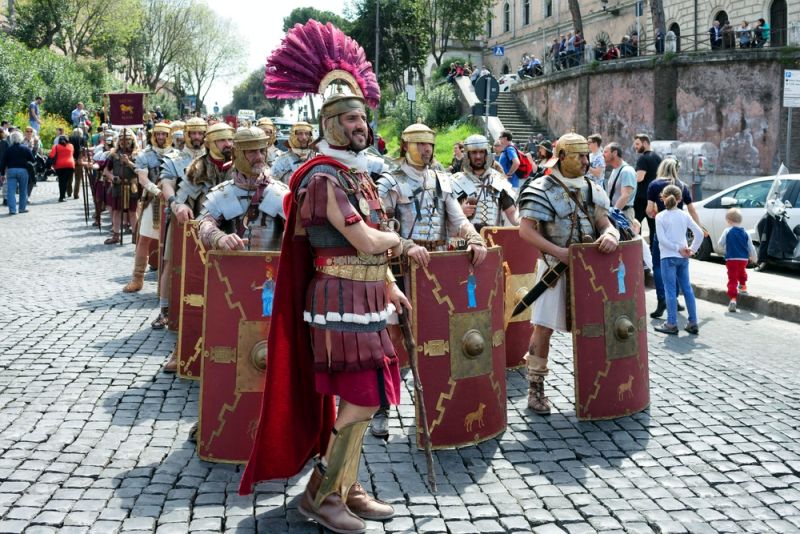
Across the city — especially around the Circus Maximus — you will see:
- Historical parades inspired by ancient legions
- Gladiator re-enactments
- Ceremonial rituals
- Fireworks at night
To most visitors, these are spectacles.
To someone guided with architectural insight, they become context.
Reading Rome Through Its Origins
Rome cannot be understood chronologically.
It must be understood spatially.
During this period, places like:
- The Roman Forum
- The Palatine Hill
become more than archaeological sites.
They become:
- political centers
- symbolic constructions of power
- the foundation of urban planning in Western civilization
A well-designed
👉 Rome Architecture Tour
allows you to see:
- Why the city was built here
- How topography shaped power
- How architecture became a language of empire
This is where Roma-Bella stands apart.
Why April Is Ideal for Private Rome Tours
April offers a rare balance:
- Mild weather for walking and observation
- Longer daylight hours
- A cultural calendar that adds meaning without overwhelming the experience
But more importantly:
It allows for reflection, not just movement.
After high season peaks like Easter, Rome becomes more readable.
For travelers seeking a Private Rome Tour designed around understanding, this is one of the most strategic months to visit.
A Different Way to Experience Rome
Roma-Bella is not a tour agency.
It is the work of one architect and historian who has spent nearly three decades studying and explaining Rome.
Each visit is:
- personally designed
- adapted to your pace and interests
- structured to build understanding, not just impressions
Before your arrival, you will already be in conversation.
Because a meaningful visit begins long before you step into the city.
Plan Your Visit Around Rome’s Birthday
If your trip coincides with April, Natale di Roma offers a powerful anchor for your itinerary.
Not as an isolated event — but as a lens through which the entire city can be understood.
A
👉 Custom Rome Itinerary
can be structured to:
- connect the celebrations with their historical origins
- explore the urban logic behind ancient Rome
- balance iconic sites with quieter, more revealing spaces
Begin with a Conversation
Rome is not a city you visit.
It is a city you learn to read.
If you are considering a Private Rome Tour designed around understanding, the process begins before you arrive.
Contact Ximena directly and share your travel dates, interests, and pace.
You will receive a personally designed itinerary — not a predefined tour, but a proposal built around how you want to experience Rome.
There is no obligation to commit immediately.
A small reservation secures your dates.
The final plan is confirmed together once it aligns perfectly with your trip.
👉 Contact Ximena directly: https://roma-bella.com/contact/
Suggested Reading
For historical context on the celebration:
https://www.turismoroma.it
Final Thought
April in Rome is not about seeing more.
It is about finally beginning to understand what you are looking at.

by Ximena Amarales | Sep 22, 2024 | News, Rome |
As we say CIAO to the summer heat, Rome welcomes the charming ambiance of fall. Experience the Eternal City adorned with softer light and milder autumn temperatures this September. It’s the perfect time to explore, as the city casts itself in the golden hues of the setting sun, creating a magical backdrop for unforgettable memories.
Autumn in Rome – A Spectacular Display
Autumn brings a spectacular palette of colors that enhance Rome’s already stunning architecture and historic sites. Picture the Roman Forum with its ancient ruins set against a canvas of amber skies or the Vatican’s majestic silhouette cutting through a dusk-lit sky. These are just snippets of what makes Rome particularly special during the fall.
Perfect Weather for Exploring
Gone are the scorching days of summer! Fall temperatures in Rome are ideal for wandering through its picturesque streets, piazzas, and sprawling gardens. With averages ranging from 15°C to 25°C (59°F to 77°F), you can comfortably enjoy outdoor cafés, serene walks along the Tiber River, and strolls through historic districts without the summer crowds.
Sunset Watching Spots
Rome in the fall serves up some of the most breath-taking sunsets, painting the sky with vivid oranges, pinks, and purples. For the best views, head to:
The Pincian Hill: Overlooking the Piazza del Popolo, it offers panoramic views of the city.
Gianicolo Hill (Janiculum): Provides an unobstructed view over the rooftops of Rome.
The Orange Garden (Giardino degli Aranci): Ideal for a romantic sunset with a view of St. Peter’s dome.
Cultural Events
Autumn also marks a prosperous cultural season in Rome. With various art exhibitions, music festivals, and culinary events starting in September, there’s an additional layer of vibrancy to the city.
Witnessing Rome in the fall is like watching a city reborn with new colors, softer light, and an infectious energy. It’s the ideal time to see the city through a different lens—a quieter, yet equally enthralling, moment before the winter sets in.
Don’t let another autumn pass by without experiencing Rome in its most magical season. Wander through history with the expertise of an architect at your side, uncovering the heart and soul of the Eternal City in ways you’ve never dreamed of. Tailor your journey with Roma Bella, where each tour is crafted passionately, ensuring a personalized experience that resonates with your unique interests and desires. From the back of a scooter weaving through Rome’s lively streets to the awe-inspiring grandeur of the Vatican, let’s make this autumn an unforgettable tapestry of experiences.
Discover the beauty of autumn in Rome and create memories that will last a lifetime. Visit www.roma-bella.com today to explore exclusive, tailor-made tours designed just for you. Your Roman adventure awaits!

by Ximena Amarales | Aug 14, 2018 | Museums, News, Rome |
It has been said multiple times – Rome is an open door museum. It is a stunning view for every first-time visitor, still astonishing the second time, overwhelming even for those who have been there many times.
Roma has a huge concentration of museums, showcasing some of the best art and sculpture examples in the whole World. Our tour will take you around exploring the 4 museums in Rome you must see.
There are no such beauties anywhere else: visiting Rome is a one and only experience, like no other. Huge open spaces, theatres, classical landscapes, egyptian obelisques, roman arches, basilicas and ancient ruins. All of the above and much much more.
Whether you are in town for one day only, one full week or whether you are planning on staying for the rest of your life, there are definitely 4 museums in Rome you must see.
(more…)